
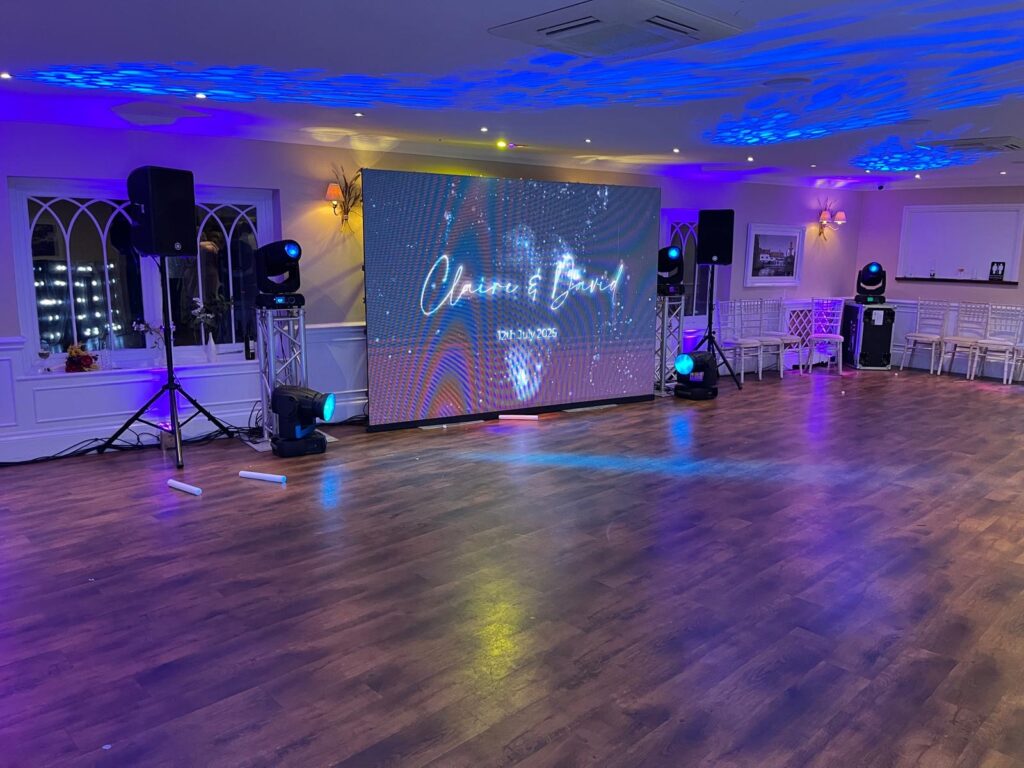
Indoor LED screens are used at conferences, exhibitions, product launches and corporate events to display presentations, videos, branding and live content. They provide bright, clear visuals without relying on projection surfaces, making them suitable for many indoor venues.
However, choosing an indoor LED screen involves more than selecting a display size. Venue lighting, viewing distance, screen placement and content all influence how well the display works.
This guide explains what event organisers should consider when choosing an indoor LED screen for their venue.
What Is an Indoor LED Screen?
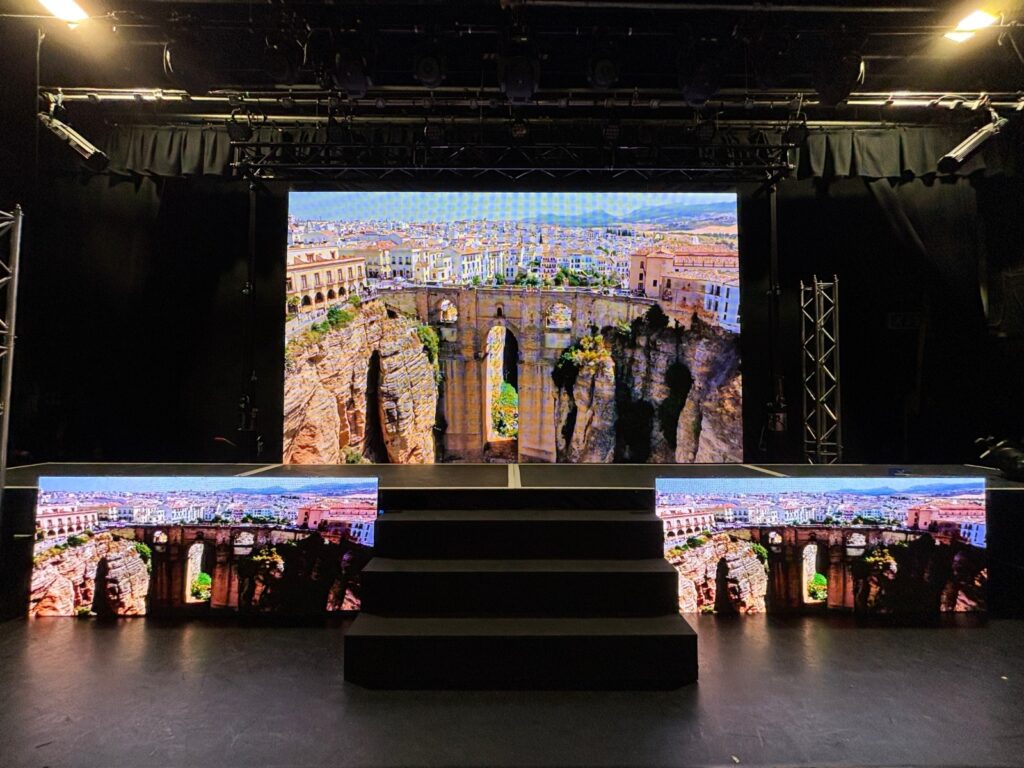
An indoor LED screen is a digital display designed for use inside buildings. It uses light-emitting diodes to produce images, videos, graphics and text.
Unlike outdoor LED displays, indoor screens are generally designed for controlled lighting conditions and closer viewing distances. Their specifications and brightness requirements can differ depending on the venue and application.
Indoor LED screens can be used for:
- Corporate conferences and presentations
- Exhibition stands and trade shows
- Product launches
- Awards ceremonies
- Company meetings
- Indoor entertainment events
- Branding and promotional displays
The appropriate screen depends on the room, audience and type of content being displayed.
Where Are Indoor LED Screens Used at Events?
Corporate Conferences
Indoor LED screens can display presentation slides, speaker visuals, event branding and video content.
For larger conferences, screens can help attendees seated further away follow the presentation. Depending on the setup, additional displays may be positioned around the venue.
Exhibition Stands
Exhibitors use indoor LED screens to display product demonstrations, promotional videos and branded content.
A well-positioned display can help attract attention from visitors and communicate information without requiring printed materials alone.
Product Launches
Indoor LED screens can support product launch presentations, reveal sequences, branded graphics and promotional videos.
The screen content can be coordinated with lighting, audio and stage activity to support the event programme.
Awards Ceremonies
Awards events may use LED displays for nominee information, winner announcements, sponsor branding and graphics.
Large displays can also support live camera feeds and visual content during presentations.
What Should You Consider When Hiring an Indoor LED Screen?
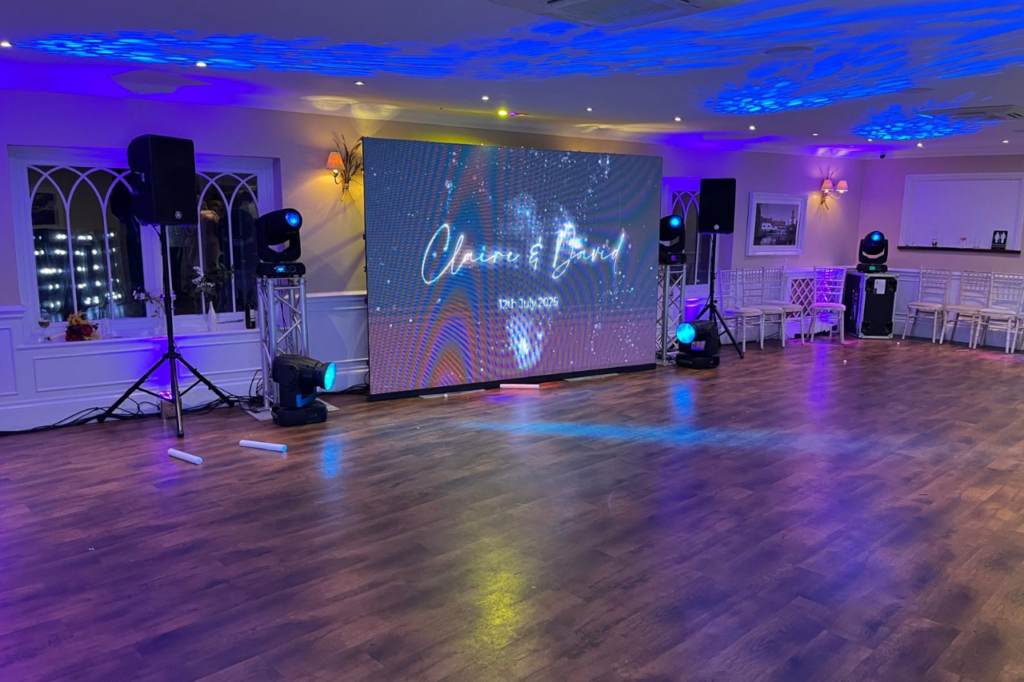
Choosing an indoor LED screen involves several practical considerations.
1. Screen Size and Viewing Distance
The screen should be large enough for the audience to see the content comfortably.
A display that works well in a small meeting room may not be suitable for a conference with hundreds of attendees.
Consider:
- The dimensions of the venue
- The number of attendees
- The distance between the screen and the furthest audience members
- The type of content being displayed
- Whether additional screens are required
For presentations containing small text, charts or detailed graphics, visibility is particularly important.
2. Pixel Pitch and Image Quality
Pixel pitch refers to the distance between individual pixels on an LED display. It is commonly expressed in millimetres.
A smaller pixel pitch generally provides a higher pixel density, making the display suitable for closer viewing distances and detailed content.
For indoor events, the viewing distance should be considered when selecting pixel pitch. A display viewed from a short distance may require a finer pixel pitch than one positioned further away.
The right specification depends on the display size, audience position and content requirements.
3. Venue Lighting and Brightness
Indoor venues have different lighting conditions.
A conference room with controlled lighting may have different requirements from a brightly illuminated exhibition hall.
The display needs sufficient brightness to remain visible without appearing unnecessarily intense. The surrounding lighting, screen position and content should all be considered when planning the setup.
4. Screen Placement
The position of the screen affects how easily attendees can see it.
Consider whether the display will be positioned:
- Behind the main stage
- Beside a presentation area
- Within an exhibition stand
- At the entrance to a venue
- In a dedicated viewing area
The screen should remain visible from the intended audience positions. Columns, furniture, stage structures and other obstacles may affect visibility.
5. Content and Display Format
Not all event content uses the same screen format.
Presentations, videos, live camera feeds and promotional graphics may require different layouts.
Before hiring an indoor LED screen, confirm the content format, aspect ratio and playback requirements with the production team.
This helps ensure that presentations and videos display correctly without unnecessary cropping or distortion.
Indoor LED Screens vs Projectors
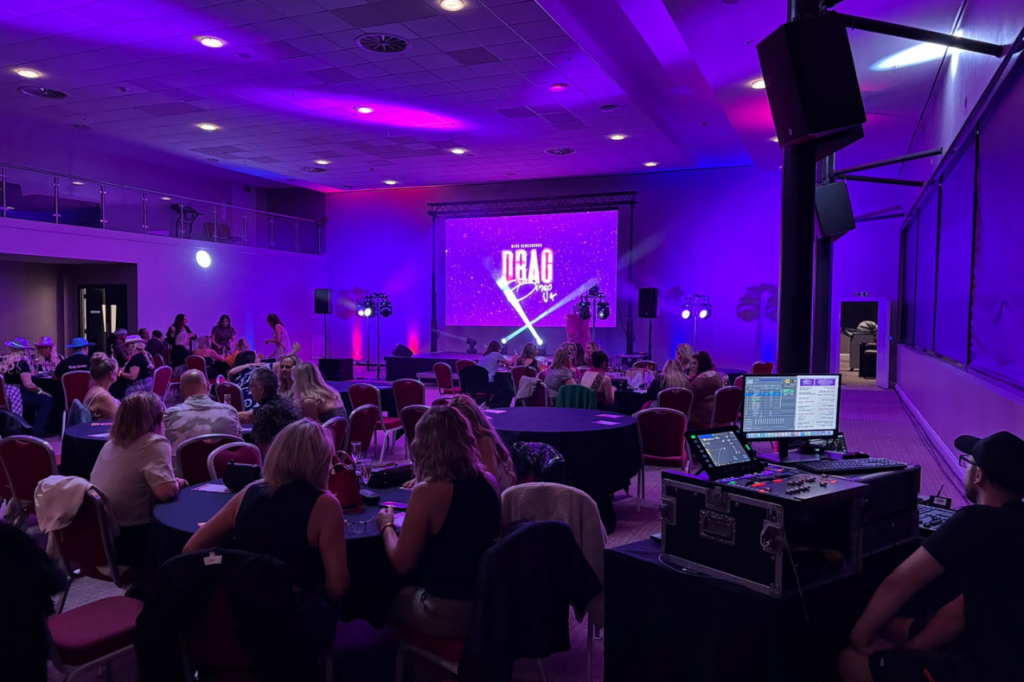
Indoor LED screens and projectors can both be used for presentations and event visuals, but they have different characteristics.
| Indoor LED Screen | Projector |
|---|---|
| Produces images using LED display panels | Projects images onto a surface |
| Can work well in venues with ambient lighting | Image visibility can be affected by ambient lighting |
| Uses modular display panels | Requires a projection surface |
| Can support different screen configurations | Screen size depends on projection distance and equipment |
| Requires LED panels and display processing equipment | Requires a projector and suitable projection surface |
The most suitable option depends on the venue, budget, content and visual requirements.
For events requiring bright visuals, branded displays or large-format presentation screens, an indoor LED screen may be a suitable choice.
What Equipment Is Needed for an Indoor LED Screen Setup?
An indoor LED screen setup may involve several components, depending on the event requirements.
These can include:
- LED display panels
- Screen structure or mounting system
- Video processor
- Playback equipment or presentation laptop
- Signal cables and connections
- Power distribution
- Technical operators
The equipment configuration depends on the screen size, content and venue.
For larger displays, the installation and technical setup should be planned carefully to ensure the equipment is positioned securely and the content displays correctly.
How to Prepare Your Venue for Indoor LED Screen Hire
Before the event, organisers should confirm several details with their AV supplier.
Confirm the Available Space
Check the dimensions of the stage or area where the screen will be installed.
Allow space for the display structure, equipment and any required access.
Check Access and Installation Requirements
Confirm how equipment will enter the venue, including loading access, lifts, door dimensions and any restrictions on installation times.
Review Power Requirements
The venue should have suitable power arrangements for the planned equipment.
Power requirements should be confirmed with the supplier before installation.
Prepare Your Content
Have presentations, videos and graphics ready in advance.
Check the format and resolution requirements with the production team so content can be tested before guests arrive.
Allow Time for Testing
The screen should be tested before the event begins.
This allows the team to check display quality, connections, playback and content positioning.
Indoor LED Screen Hire for Corporate Events and Exhibitions
Indoor LED screens can support a wide range of event formats, from small corporate presentations to larger conferences and exhibition stands.
Choosing the right display requires consideration of the venue, audience, content and technical requirements.
Technically Unique provides audio-visual equipment and event support for organisers planning events. If you’re considering an indoor LED screen, discussing your venue and event requirements in advance can help determine an appropriate setup.
Planning an indoor event? Contact Technically Unique to discuss your LED screen and AV requirements.
Frequently Asked Questions
What is an indoor LED screen used for?
Indoor LED screens are used to display presentations, videos, graphics, branding and live content at conferences, exhibitions, product launches and other indoor events.
What pixel pitch is best for an indoor LED screen?
The appropriate pixel pitch depends on viewing distance, screen size and content. Displays viewed from closer distances generally benefit from a finer pixel pitch.
Are indoor LED screens suitable for conferences?
Yes. Indoor LED screens can display presentations, speaker visuals, videos and live camera feeds during conferences.
Can indoor LED screens be used at exhibitions?
Yes. They can be used on exhibition stands to display promotional videos, product demonstrations and branded content.
Are indoor LED screens better than projectors?
Neither option is automatically better for every event. Indoor LED screens can offer bright visuals and flexible display configurations, while projectors may suit other venues and budgets. The choice depends on the event requirements.
Conclusion
Indoor LED screens are a useful option for conferences, exhibitions, product launches and corporate events that require clear digital visuals.
By considering screen size, pixel pitch, viewing distance, venue lighting and content requirements, organisers can choose a display that suits their event.
Planning these details with an AV supplier helps ensure the screen is suitable for the venue and ready for the programme.