
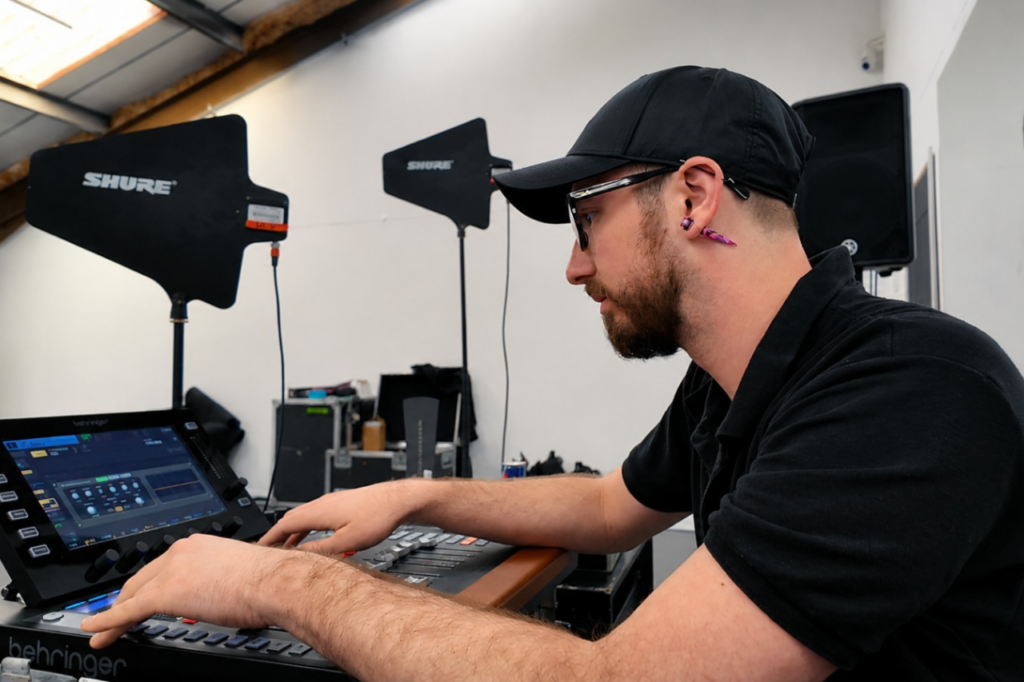
Behind every successful conference, awards ceremony or corporate presentation is a team responsible for making the technical elements work. Audio, lighting, video and presentation systems all need to be prepared and managed throughout the event.
An AV technician helps make this possible.
If you’re organising an event and considering technical support, understanding what an AV technician does can help you plan your requirements and coordinate your suppliers.
What Is an AV Technician?
An AV technician, or audio-visual technician, is a professional who sets up, tests, operates and troubleshoots audio-visual equipment.
Their responsibilities depend on the event and the equipment involved. Some technicians specialise in sound, lighting or video, while others work across several technical areas.
At events, AV technicians help ensure that presenters can be heard, presentations display correctly and technical equipment operates as expected.
What Does an AV Technician Do at an Event?
1. Sets Up Audio Equipment
Sound is one of the most important technical elements of an event.
An AV technician may install and configure:
- Speakers and PA systems
- Wired and wireless microphones
- Audio mixing desks
- Signal cables
- Audio playback equipment
They may also perform sound checks to confirm that microphones and speakers work correctly before attendees arrive.
2. Operates Lighting Equipment
Depending on the event, technicians may set up and operate lighting equipment for stages, presentations and performances.
This can include adjusting brightness, positioning lighting fixtures and managing lighting cues during the programme.
3. Manages Video and Presentations
AV technicians help prepare the visual elements of an event.
Their work may involve:
- Connecting presentation laptops
- Testing PowerPoint presentations
- Playing videos
- Managing display connections
- Checking screen output
- Supporting live camera feeds
They may also help presenters connect their devices and resolve display problems.
4. Performs Technical Checks
Before an event begins, technicians check that equipment is working correctly.
This may include testing microphones, checking audio levels, verifying presentation playback and confirming that video signals reach the correct displays.
These checks help identify potential problems before the audience enters the venue.
5. Troubleshoots Technical Problems
Technical problems can happen during live events.
An AV technician may need to investigate issues such as:
- Microphones that stop working
- Audio feedback
- Presentation connection problems
- Video playback errors
- Incorrect display settings
- Audio or video signal interruptions
Their ability to identify problems and respond quickly can help reduce disruption.
6. Supports the Event Programme
Some events require technicians to operate equipment throughout the programme.
They may manage microphone handovers, presentation changes, video playback, lighting cues and other technical elements according to the event schedule.
For conferences and awards ceremonies, this often involves working closely with presenters, organisers and other production staff.
What Equipment Does an AV Technician Work With?
The equipment depends on the event and the technician’s responsibilities.
| Equipment | Purpose |
|---|---|
| PA systems | Amplify speech and audio |
| Microphones | Capture speech and presentations |
| Mixing desks | Control audio levels and sources |
| Speakers | Deliver sound to the audience |
| Projectors | Display presentations and video |
| LED video walls | Display large-format visual content |
| Lighting fixtures | Illuminate stages and event spaces |
| Video processors | Manage video signals and display output |
| Playback equipment | Play presentations, videos and audio |
Some events require a single technician, while larger productions may involve several specialists.
What Skills Should an AV Technician Have?
AV technicians need a combination of technical knowledge, practical experience and communication skills.
Technical Knowledge
Understanding audio, video, lighting and signal connections helps technicians work with different equipment.
They should also understand how to connect systems correctly and identify common technical issues.
Problem-Solving Skills
Live events can involve unexpected technical problems.
Technicians need to assess issues, identify possible causes and find solutions without unnecessarily disrupting the programme.
Communication
AV technicians work with event organisers, speakers, venue teams and other technical staff.
Clear communication helps everyone understand the schedule, equipment requirements and any changes.
Attention to Detail
Small technical details can affect the event.
Checking cables, microphone batteries, presentation formats and equipment settings helps reduce preventable problems.
Time Management
Equipment needs to be installed and tested within the available setup period.
Technicians must work efficiently while allowing sufficient time for testing and rehearsals.
Do All Events Need an AV Technician?
Not every event requires dedicated technical staff.
A small meeting using a television and a basic presentation system may be manageable without an on-site technician.
However, events involving multiple microphones, presentations, lighting cues, video playback or live performances may benefit from technical support.
The more complex the programme and equipment setup, the more important technical coordination becomes.
When Should You Hire an AV Technician?
Consider technical support when your event includes:
- Multiple speakers or presenters
- Several microphones
- Large presentation displays
- Live video playback
- Stage lighting
- Panel discussions
- Entertainment or performances
- Multiple technical changes throughout the programme
For larger events, technicians may also be needed during installation, rehearsals, the live programme and dismantling.
AV Technician vs Event Production Team
An AV technician is generally responsible for specific technical equipment or systems.
An event production team may coordinate several technical areas, including sound, lighting, video, staging and crew.
For example, a conference may require audio technicians, lighting technicians and video operators working together under a production manager or technical lead.
The number of people required depends on the event’s scale and technical complexity.
Why AV Technicians Matter for Corporate Events
Technical equipment supports the communication and presentation goals of a business event.
A speaker needs a working microphone. Presentations need to display correctly. Videos need to play at the right time. Lighting needs to support the stage and presenters.
AV technicians help manage these requirements and provide technical support throughout the event.
Their work is particularly useful when organisers need to concentrate on guests, speakers and the event programme rather than managing equipment themselves.
Hiring AV Technicians for Your Event
When arranging technical support, it helps to explain your event requirements clearly.
Consider sharing:
- Event type and venue
- Expected audience size
- Event schedule
- Equipment requirements
- Number of presenters
- Presentation and video formats
- Setup and rehearsal times
- Whether technicians are needed throughout the event
This information helps determine the appropriate technical support and staffing requirements.
Technically Unique provides event equipment and staffing support for organisers planning events. If your event requires AV equipment or technical assistance, discuss your requirements in advance to identify an appropriate setup.
Planning an event? Contact Technically Unique to discuss your audio-visual and event staffing requirements.
Frequently Asked Questions
What does AV stand for?
AV stands for audio-visual. It refers to equipment and systems used to produce, display or manage sound and visual content.
What is the difference between an AV technician and a sound technician?
A sound technician focuses primarily on audio equipment and sound management. An AV technician may work across audio, video, presentations and other technical systems.
Do AV technicians operate equipment during events?
Yes. Depending on the event requirements, technicians may operate equipment during the live programme, including microphones, presentations, lighting and video playback.
Are AV technicians needed for conferences?
Conferences involving presentations, multiple speakers, microphones or video content often benefit from technical support.
When should AV technicians arrive at an event?
Arrival time depends on the equipment, venue access and event schedule. Technicians should have sufficient time for installation, testing and any required rehearsals before the programme begins.
Conclusion
AV technicians play an important role in the technical delivery of conferences, corporate events, exhibitions and other live programmes.
From setting up equipment to operating systems and troubleshooting problems, their responsibilities help ensure that technical elements support the event as planned.
Understanding what AV technicians do can help organisers determine the right level of technical support for their event.