
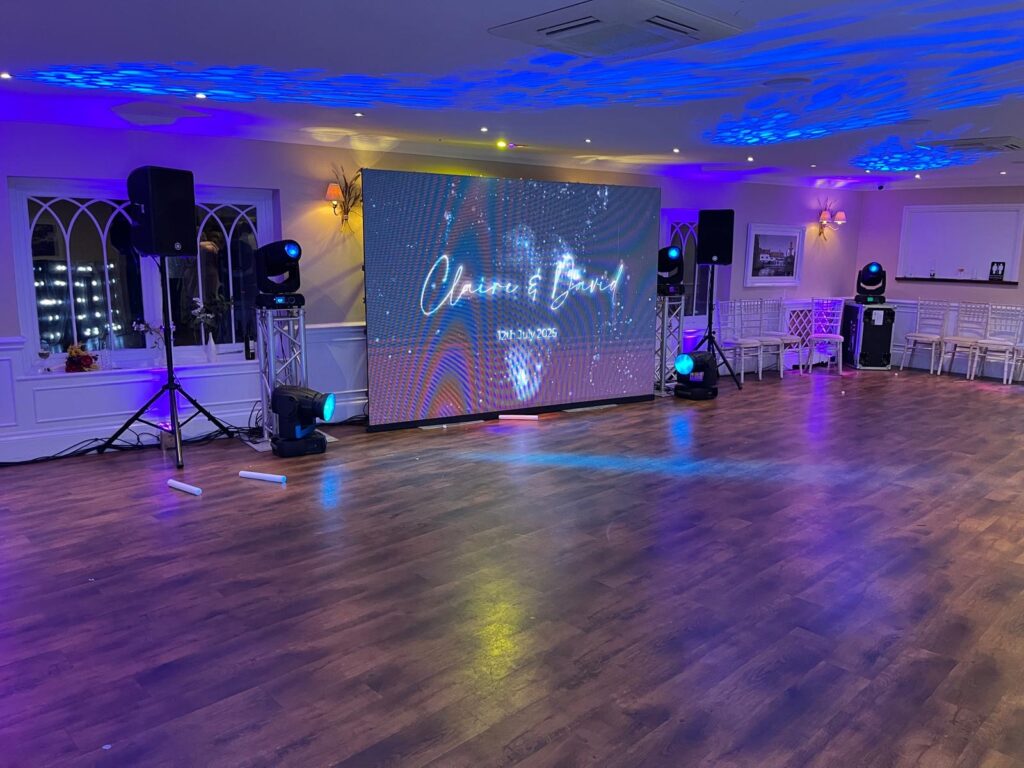
Audio-visual equipment needs a reliable power supply to operate correctly during an event. Sound systems, LED screens, lighting equipment, projectors and production control systems all have electrical requirements that need to be considered before installation.
Without proper planning, an event may experience overloaded circuits, unsuitable power connections, cable management problems or unexpected interruptions.
Event power planning involves understanding the equipment being used, checking the venue’s electrical facilities and coordinating power distribution with the production team.
This guide explains what event organisers should consider when preparing power for an AV setup.
Why Is Power Planning Important for Events?
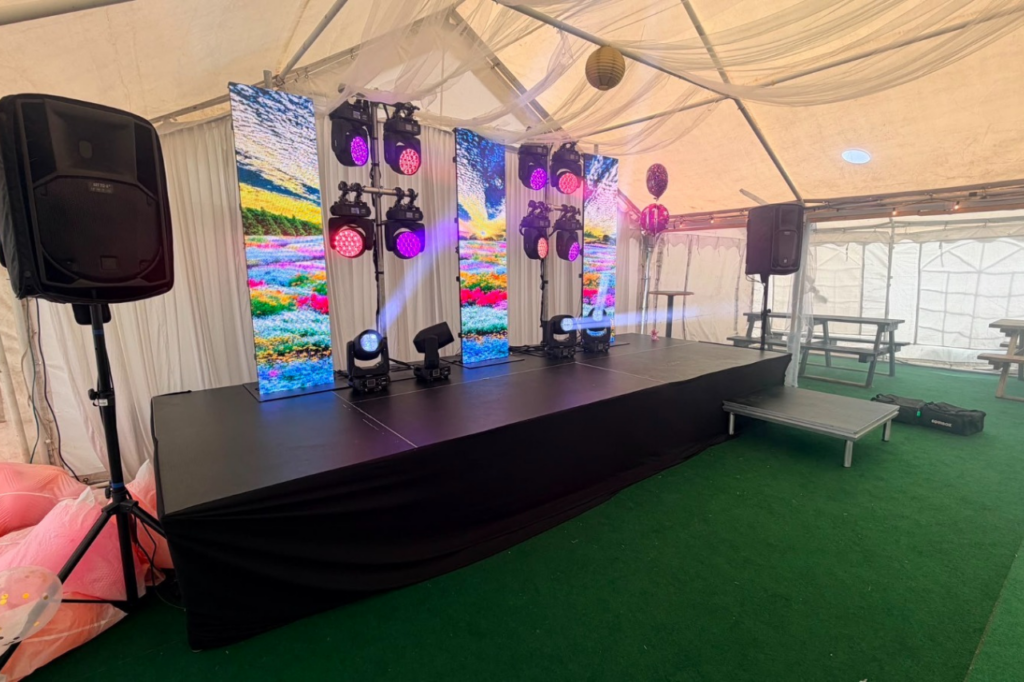
Power requirements are often overlooked during the early stages of event planning. Organisers may focus on the venue, staging, speakers and displays without considering how everything will receive electricity.
However, the electrical setup affects several parts of event production.
Good planning helps to:
- Identify the power requirements of each piece of equipment.
- Check whether the venue has suitable electrical capacity.
- Reduce the risk of overloaded circuits.
- Plan safe cable routes around the venue.
- Identify additional power equipment that may be required.
- Allow enough time for electrical checks before the event starts.
Power planning is particularly important for events using several types of AV equipment at the same time.
Which Event Equipment Needs a Power Supply?
Different types of AV equipment have different electrical requirements. The production team should prepare an equipment list before confirming the power arrangements.
1. Sound Equipment
A professional sound system may include speakers, subwoofers, amplifiers, mixing desks and wireless microphone receivers.
Each component has its own power requirements. Larger sound systems may also require more substantial power arrangements than a small presentation setup.
The equipment list should identify the number and type of devices being used, along with their electrical specifications.
2. LED Screens and Video Walls
LED screens can form a significant part of an event’s power requirements, particularly when several panels are combined into a large display.
The total electrical demand depends on the screen configuration and the manufacturer’s specifications.
Video processors, media servers and other supporting equipment may also need separate power connections.
3. Stage Lighting
Stage lighting can include LED fixtures, moving lights, lighting consoles and control equipment.
The number of fixtures, their power ratings and how they will be operated all affect the electrical plan.
Lighting and AV teams should coordinate their requirements to avoid relying on the same circuits without checking the available capacity.
4. Projectors and Presentation Equipment
Projectors, presentation computers, monitors and video switching equipment also need suitable power connections.
Although individual devices may have relatively modest power requirements, several pieces of equipment can add up across a complete production setup.
5. Control and Technical Equipment
Production control areas may contain equipment such as:
- Audio mixing consoles
- Video switching systems
- Media servers
- Lighting control desks
- Computers and monitors
- Signal distribution equipment
These devices are important to the operation of the event. Their power requirements and connection locations should be included in the production plan.
How to Calculate Event Power Requirements
The first step is to identify the electrical demand of all the equipment that will be used.
Equipment labels, manufacturer documentation and technical specifications can provide the required information.
For equipment rated in watts, the basic calculation is:
Total power demand = Sum of the wattage of all equipment
For example, if a setup includes:
- Sound equipment: 1,200 W
- LED display equipment: 2,000 W
- Lighting equipment: 1,500 W
- Control equipment: 300 W
The combined listed load would be 5,000 W.
This is a basic example, not a complete electrical design. Actual requirements depend on operating conditions, equipment characteristics, circuit ratings, starting currents and the way loads are distributed.
A qualified electrician or competent electrical professional should assess the final arrangement, including circuit capacity and protection.
Understanding Power Distribution at Events
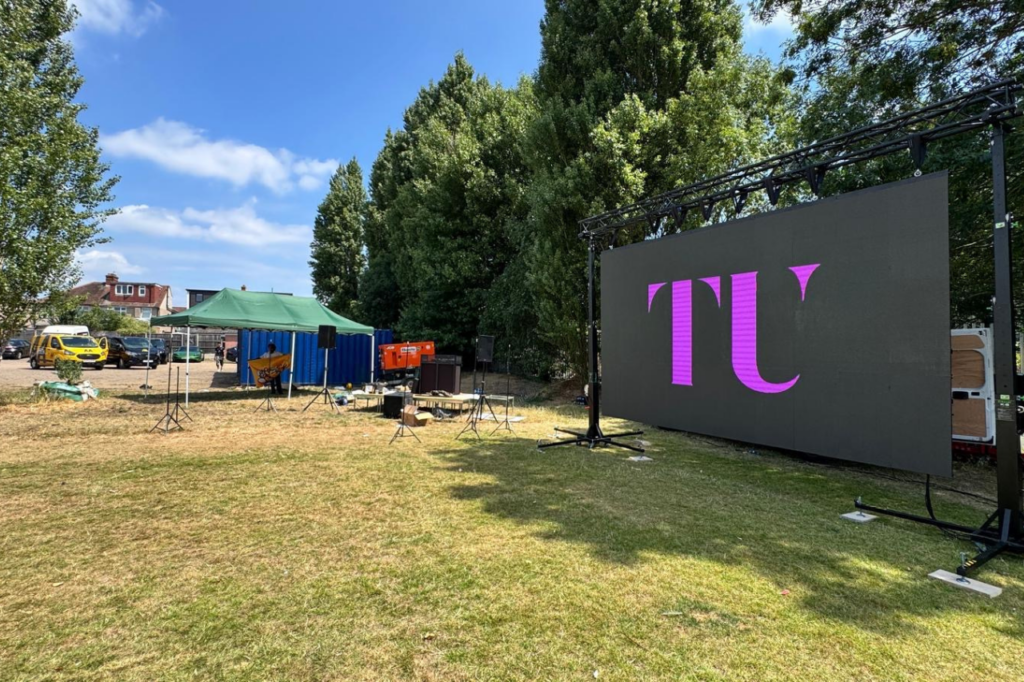
Power distribution is the process of supplying electricity to different areas and equipment within an event setup.
A venue may have several available outlets or distribution points, but this does not automatically mean they can all support the planned equipment.
The production team needs to understand where power will be supplied and how it will reach each part of the event.
Venue Power Supply
Start by checking the venue’s available electrical supply.
Useful information includes:
- Available voltage and frequency
- Socket types and locations
- Circuit ratings
- Available distribution points
- Any restrictions on electrical connections
- Whether additional temporary power is permitted
The venue should provide accurate information about its electrical facilities. Never assume that a standard wall socket can support a large AV setup.
Separating Equipment Loads
Where appropriate, different equipment groups may need to be supplied by separate circuits.
For example, sound, lighting and video equipment may have different requirements. The final circuit arrangement should be determined by a qualified professional based on the equipment specifications and venue supply.
Separating loads can also make it easier to identify the source of a problem if an electrical issue occurs.
Temporary Power Distribution
Some events require temporary distribution equipment to supply different areas of a venue.
This equipment must be suitable for the intended application and installed by competent personnel.
The arrangement should account for the total load, circuit protection, cable ratings and environmental conditions.
Cable Management and Power Access
Power planning also involves deciding how cables will reach the equipment.
Poor cable management can create trip hazards, obstruct access routes and make technical areas difficult to maintain.
Before installation, consider the following:
Plan Cable Routes
Identify the route between power sources and equipment positions.
Avoid running cables through busy walkways or emergency access routes. Where cables must cross pedestrian areas, suitable protection and routing arrangements should be used.
Keep Power and Signal Cables Organised
Power and signal cables serve different purposes and should be arranged according to the equipment and installation requirements.
Keeping connections organised makes troubleshooting easier and reduces confusion during setup.
Allow Access for Technical Teams
Equipment may need to be disconnected, checked or adjusted during installation and rehearsals.
Cable routes should allow technical staff to reach important connections without disturbing other parts of the setup.
Consider Outdoor Conditions
Outdoor events introduce additional considerations, including moisture, weather exposure and ground conditions.
Electrical equipment, connectors and distribution arrangements must be suitable for the environment. Outdoor installations should be assessed by competent electrical professionals.
What to Check with the Venue Before the Event
Venue power information should be requested before the technical setup is finalised.
The following questions can help establish what is available.
| Question | Why It Matters |
|---|---|
| Where are the power outlets? | Helps determine equipment placement and cable routes. |
| What electrical capacity is available? | Helps establish whether the venue can support the planned setup. |
| Are three-phase connections available? | May be relevant to larger productions and specific equipment. |
| Are there restrictions on temporary distribution? | Helps identify venue rules before installation. |
| Can equipment be tested before the event? | Allows technical checks before guests arrive. |
| Is a generator permitted if needed? | Helps establish alternative arrangements where venue supply is insufficient. |
The answers should be shared with the AV supplier and the relevant technical personnel.
What Happens If the Venue Does Not Have Enough Power?
If the available supply cannot support the planned equipment, the production team may need to review the technical requirements.
Possible options include:
- Adjusting the equipment specification.
- Reviewing how electrical loads are distributed.
- Using suitable temporary power distribution.
- Arranging an appropriately specified generator where permitted.
- Changing equipment positions to work with available power access.
A generator should not be selected based only on the combined wattage of the equipment. Its capacity, output characteristics, installation conditions and compatibility with the equipment must be assessed by qualified professionals.
Any changes should be agreed with the venue and the relevant electrical specialists before installation.
Event Power Planning Checklist
Use this checklist when preparing the technical requirements for an event.
- Create a complete list of AV equipment.
- Obtain the electrical specifications for each device.
- Calculate the expected combined load.
- Request electrical information from the venue.
- Identify available power outlets and distribution points.
- Confirm circuit capacity with a qualified professional.
- Plan cable routes and equipment positions.
- Check requirements for outdoor installations.
- Confirm whether temporary power distribution is needed.
- Arrange electrical checks before the event begins.
Completing these checks early can help prevent avoidable problems during installation and rehearsals.
Frequently Asked Questions
How much power does an event need?
It depends on the equipment being used, the size of the production and the way electrical loads are distributed. A small presentation may require relatively little power, while a larger event with LED screens, sound systems and stage lighting may need a more substantial supply.
Does event AV equipment need separate circuits?
Not every setup requires separate circuits. The correct arrangement depends on the equipment specifications, electrical load and venue supply. A qualified electrical professional should determine the appropriate distribution.
Can a standard venue socket power an LED screen?
It depends on the screen and its electrical requirements. Larger LED displays may need dedicated power arrangements or suitable distribution equipment. The supplier and venue should confirm the requirements before installation.
Should sound and lighting use the same power supply?
This depends on the equipment and electrical design. Sound, lighting and video systems should have their power requirements assessed together so the distribution arrangement is suitable for the complete setup.
Do outdoor events need different power arrangements?
Yes. Outdoor installations must account for weather exposure, moisture, cable protection and the suitability of electrical equipment for the environment. The installation should be assessed by competent electrical professionals.
When should event power requirements be confirmed?
Power requirements should be reviewed during the technical planning stage, before equipment positions and installation schedules are finalised. Early coordination gives the venue and production teams time to address any limitations.
Plan Your Event AV Requirements with Technically Unique
Power planning is an important part of preparing an event’s technical setup. Sound systems, LED displays, lighting and presentation equipment all need suitable electrical connections and enough capacity to operate reliably.
Technically Unique provides event AV and LED display hire services. Event organisers can discuss their equipment requirements, venue details and production plans when arranging an upcoming event.
For enquiries, visit Technically Unique’s contact page or call 0208 058 2428.