
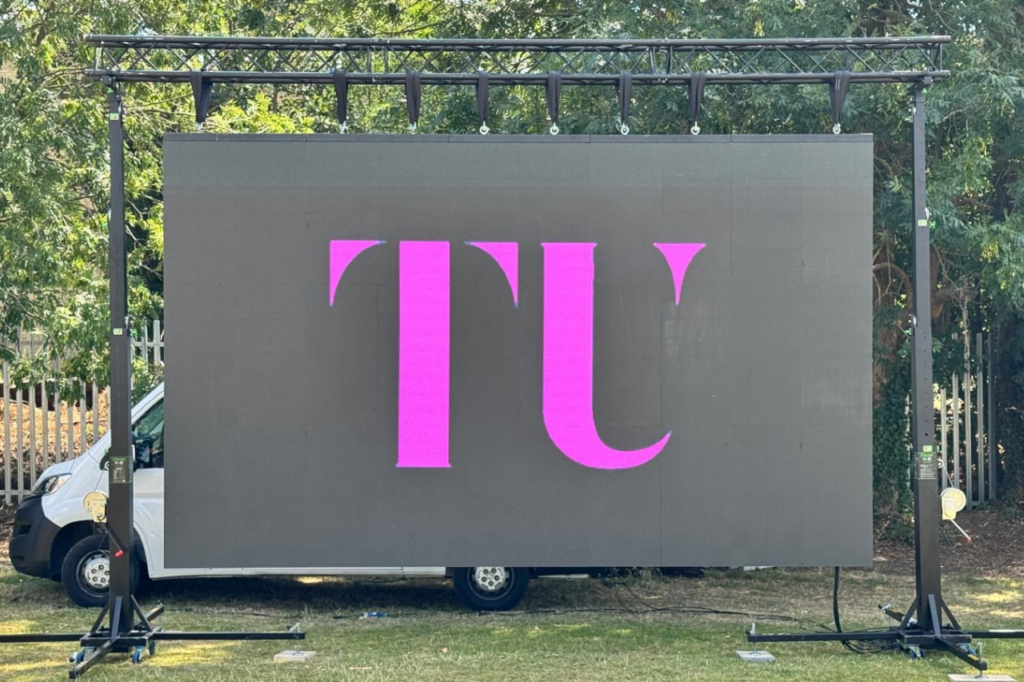
Choosing the right LED screen size is an important part of planning a successful event. A display that is too small may be difficult for the audience to see, while an oversized screen can take up valuable space and increase installation costs.
The right size depends on several factors, including the number of attendees, viewing distance, venue layout and type of content being displayed.
Whether you are organising a corporate conference, exhibition, product launch or live performance, understanding these factors can help you choose a suitable display.
This guide explains how to select an LED screen size for your event and what to discuss with your hire provider before booking.
Why Does LED Screen Size Matter?
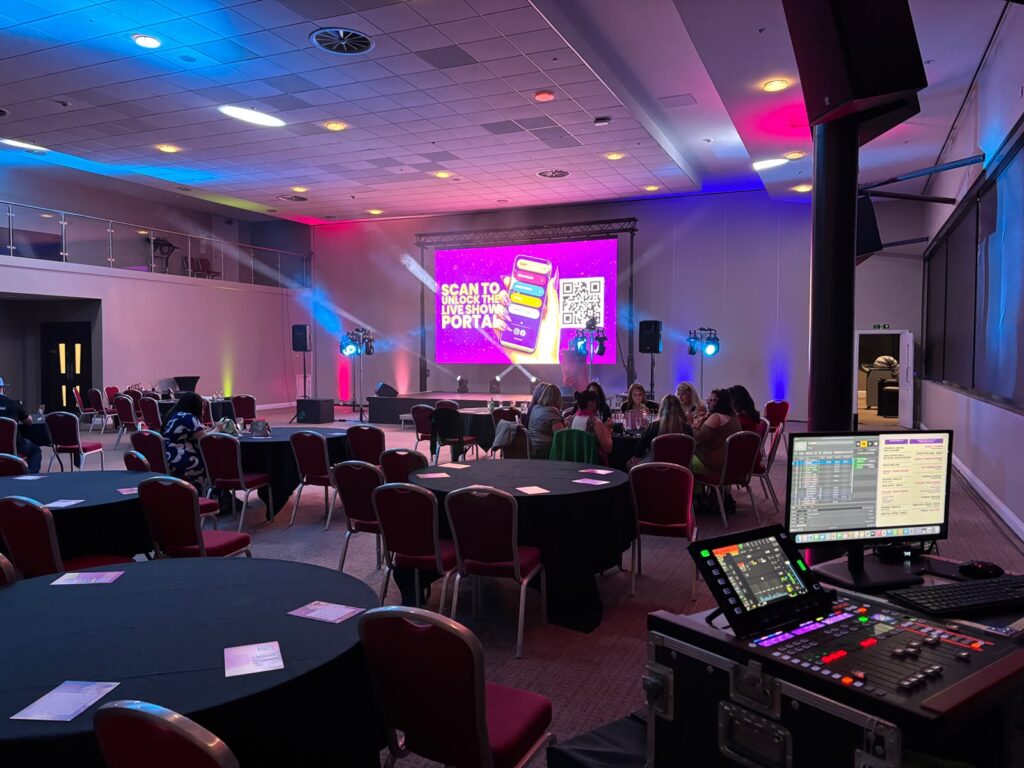
An LED screen should allow the intended audience to see the content clearly without disrupting the event layout.
For conferences, this may mean making presentation slides readable from the back of the room. For exhibitions, the screen may need to fit within a stand while remaining visible to passing visitors. For concerts, the display may need to be large enough for audiences viewing the stage from farther away.
Choosing an appropriate screen size can help you:
- Improve visibility for attendees.
- Display presentations and videos clearly.
- Make better use of the available venue space.
- Support the event’s branding and stage design.
- Avoid unnecessary equipment and installation costs.
Screen size should be considered alongside resolution, pixel pitch, brightness and viewing distance. A large display alone does not guarantee a clear image.
1. Consider the Number of Attendees
The number of people attending an event can help determine the screen size and how many displays may be needed.
A small meeting room has different requirements from a conference hall with hundreds of attendees.
For a smaller audience, one appropriately positioned screen may be sufficient. A larger venue may require a wider display, additional side screens or multiple viewing points to ensure attendees can see the content.
However, audience numbers should not be the only deciding factor.
Consider the shape of the room, seating arrangement and distance between the screen and the furthest viewers. A long, narrow room may need a different configuration from a wide auditorium with the same number of attendees.
2. Measure the Viewing Distance
Viewing distance is one of the most important factors when choosing an LED screen.
If the audience is close to the display, text and detailed graphics need to remain clear. If viewers are positioned farther away, the screen may need to be larger so that the content is easy to see.
Before selecting a display, identify the nearest and farthest audience positions.
For a conference, consider the back row of seats. For an exhibition, think about how far away visitors will stand while looking at the screen. For a concert, consider the viewing positions across the audience area.
A hire provider can use these measurements to recommend suitable screen dimensions and pixel pitch.
3. Choose a Screen Size for Your Type of Event
Different events have different display requirements. The following examples can help you understand what to consider.
Corporate Conferences
Conference screens often display presentation slides, speaker information, videos and company branding.
The screen needs to be large enough for attendees to read the content from their seats. In a wider room, a central screen may be supplemented by additional displays to improve visibility.
Consider the stage width, seating layout, ceiling height and type of presentation content before deciding on dimensions.
Exhibitions and Trade Shows
Exhibition screens need to fit the stand design while attracting attention from visitors.
A compact display may work well on a smaller stand, while a larger stand may have room for a wide LED video wall.
The viewing distance is particularly important because visitors may approach the screen to watch a demonstration or read product information.
The display should also leave enough space for products, staff and visitor movement.
Product Launches
Product launches often use LED screens for promotional videos, product reveals and branded presentations.
The screen size should suit the stage design and the visual importance of the product. A display that is too small may reduce the impact of the presentation, while an oversized screen can dominate the venue.
Consider the type of content, stage dimensions and audience viewing positions when planning the layout.
Concerts and Live Performances
Concerts and live performances may require large LED displays to show performers, camera feeds and supporting visuals.
The size depends on the stage dimensions, audience layout, viewing distance and production design.
Large outdoor events may also need several screens to provide good visibility across a wide audience area.
These installations require careful technical planning, particularly when screens are suspended or supported by temporary structures.
Weddings and Private Events
At weddings and private events, LED screens can display photographs, videos, live footage and event graphics.
The display should suit the room and complement the venue design. Consider where guests will be seated, whether the screen will be used for speeches or videos, and how much space is available.
A suitable display should be visible without obstructing guests or becoming an unnecessary focal point.
4. Understand LED Screen Dimensions and Aspect Ratio
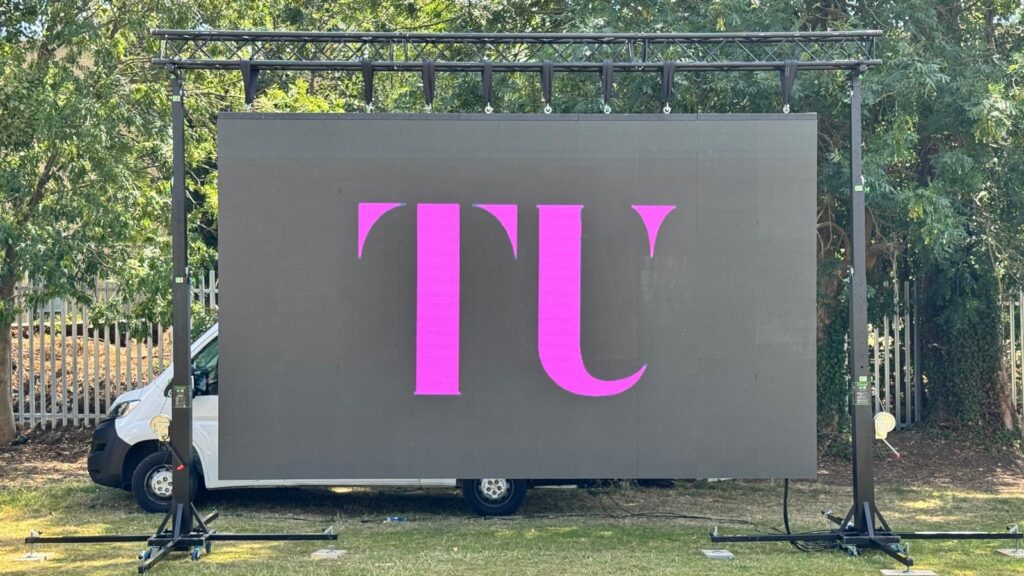
LED screens can be assembled in different dimensions using individual panels.
The final screen size depends on the panel dimensions, number of panels and chosen configuration.
Two measurements are important:
Width and height: These determine the physical size of the display and how much space it occupies.
Aspect ratio: This describes the relationship between the screen’s width and height. A 16:9 aspect ratio is common for video content, while other configurations may suit particular stages or creative designs.
For example, a screen measuring approximately 4.8 metres wide by 2.7 metres high has an aspect ratio close to 16:9.
However, not every event requires a standard widescreen display. The screen configuration should match the content and installation space.
Before confirming the equipment, ask your supplier for the final width, height and aspect ratio so that your content can be prepared correctly.
5. Don’t Overlook Pixel Pitch and Resolution
Screen dimensions and image detail are related, but they are not the same thing.
Pixel pitch measures the distance between neighbouring LED pixels, usually in millimetres. A smaller pixel pitch generally provides greater image detail at closer viewing distances.
For example, an exhibition screen viewed from a short distance may need a finer pixel pitch than a large stage display viewed from farther away.
Resolution also depends on the number of pixels across the display and its physical configuration.
When requesting a quote, explain what the screen will show and how close the audience will be. The supplier can then recommend an appropriate combination of screen size and pixel pitch.
6. Check the Available Venue Space
The venue’s dimensions can limit which screen configurations are practical.
Before booking, check:
- The width and height of the stage or installation area.
- Ceiling height and any overhead obstructions.
- Available floor space and audience walkways.
- Access routes for equipment delivery.
- The proposed mounting or support method.
- Power availability and cable routes.
- Any restrictions imposed by the venue or event organiser.
A screen may fit the stage dimensions but still be unsuitable if it blocks lighting equipment, signage or emergency access routes.
For exhibition stands, check any restrictions on stand height and the placement of large displays.
For outdoor events, the installation plan should also account for ground conditions, weather exposure and structural requirements.
7. Decide Between One Large Screen and Multiple Screens
Some events benefit from one large LED video wall, while others may work better with several displays.
A single screen can create a central visual focus for presentations, product launches and stage productions.
Multiple screens may be useful in wide venues where attendees have different viewing positions. Side screens can help display presentation content or live camera footage to people seated farther from the centre.
However, additional screens require more equipment, content planning, power and installation work.
The best option depends on the venue layout, audience visibility and event budget. Ask the supplier to explain the advantages of each configuration before making a decision.
8. Consider Indoor and Outdoor Requirements
The installation environment affects the equipment you need.
Indoor LED screens are commonly used in conference centres, exhibition halls and event venues. Their specifications depend on room lighting, viewing distance and screen placement.
Outdoor LED screens need to be suitable for the expected conditions, including daylight, moisture and wind exposure.
Outdoor installations may also require additional support structures and site-specific safety planning.
Do not assume that an indoor display can be used outdoors simply because the screen is large or bright enough. Confirm the equipment’s suitability with your supplier.
9. How Much Does Screen Size Affect Hire Costs?
Screen size can influence LED screen hire costs because larger displays generally require more panels, supporting equipment and installation work.
However, the final price also depends on other factors, including:
- Pixel pitch and screen specification.
- Indoor or outdoor equipment.
- Hire duration.
- Delivery and collection.
- Installation and dismantling.
- Video processing and playback equipment.
- Technical support requirements.
A larger display may cost more, but the relationship is not always a simple price-per-metre calculation.
When comparing quotations, confirm the dimensions and specifications of the proposed screen, as well as which services are included.
For more information, read our guide to LED video wall hire costs in the UK.
10. Prepare Your Content Before Confirming the Screen
The content you intend to display should influence your screen choice.
Presentation slides need readable text, while promotional videos may require a particular aspect ratio. Live camera feeds and custom graphics may have additional resolution or processing requirements.
Before confirming your booking, discuss the content format with the supplier.
Prepare videos and graphics to match the agreed screen configuration. This helps reduce the risk of stretched images, cropped text or unused screen space.
If the display will be used for live presentations, confirm how laptops, media players and other video sources will connect to the system.
Testing content before the event helps identify technical issues before attendees arrive.
LED Screen Hire With Technically Unique
Choosing the right LED screen size involves balancing audience visibility, venue space, content requirements and budget.
A conference may need a display that makes presentation slides readable throughout the room, while an exhibition stand may need a screen that fits neatly into its design. A concert or outdoor production may require a larger display or multiple screens to serve a wider audience.
Planning these details before booking helps you select equipment that meets the needs of the event.
Technically Unique provides event production and display hire services. Discuss your venue, audience size, content and installation requirements with the team to explore suitable options.
Planning an event? Contact Technically Unique to discuss LED screen hire and request a quotation.
Frequently Asked Questions
What is the best LED screen size for a conference?
The right size depends on the room dimensions, audience seating and content. The screen should allow attendees, including those at the back, to see the presentation clearly.
How do I calculate the LED screen size I need?
Start by measuring the available installation area and the distance between the screen and the audience. Consider the content, aspect ratio and viewing conditions, then ask your supplier to recommend suitable dimensions.
Is a bigger LED screen always better?
No. A larger screen may improve visibility in some venues, but it can also increase equipment and installation costs. The screen should suit the audience, space and event purpose.
What aspect ratio is best for an LED video wall?
A 16:9 aspect ratio is common for video content, but other configurations may be more suitable for certain stages, creative layouts or exhibition stands. Match the screen configuration to your content wherever possible.
Do outdoor events need larger LED screens?
Not necessarily. Screen size depends on the audience layout, viewing distance and content. Outdoor displays may also need greater brightness and suitable weather protection.
Should I consult an LED screen hire company before choosing a size?
Yes. A supplier can help assess the venue dimensions, viewing distance, content and installation requirements to recommend a suitable display configuration.